Hello fellow crafters! As the days grow longer and the world bursts with vibrant color, there’s no better time to welcome spring into your home than with the cheerful charm of crochet daffodils. Imagine delicate, sunshine-yellow blooms, their ruffled petals unfurling with a delightful, handmade touch. These sweet little flowers are incredibly versatile and absolutely perfect for crocheters of all levels. Whether you’re just starting your yarn journey, looking for a thoughtful handmade gift for a loved one, or wanting to add a pop of springtime joy to your decor, these patterns are for you!
In this free pattern guide, you’ll discover how to stitch these lovely daffodils with ease. We’ll walk you through each step, from creating those signature trumpet centers to shaping the delicate petals. Get ready to embrace the season with these delightful crochet creations – happy hooking!

Crochet Daffodils for Spring: Brighten Your World with Free Patterns!
Spring is in the air, and what better way to usher in the season of renewal than with the cheerful bloom of daffodils? These sunny yellow beauties are iconic, and bringing them to life with crochet is a wonderfully rewarding craft. Whether you’re a seasoned crocheter looking for a quick and delightful project, or a beginner eager to learn new stitches, these free daffodil patterns are sure to bring a smile to your face and a touch of sunshine to your home. Let’s dive into creating your very own crochet daffodil bouquet!
Yarn and Hook Recommendations: Choosing Your Sunshine
The beauty of crochet is its versatility, and for delicate flowers like daffodils, you have a few excellent yarn choices.
Worsted Weight Cotton Yarn: This is often the go-to for amigurumi and small crochet projects. Cotton is breathable, has a lovely stitch definition, and holds its shape well, which is perfect for creating structured daffodil petals and cups. It also comes in a vibrant array of colors. For bright, sunny daffodils, opt for shades of yellow and a hint of white or cream for the trumpet. You might also want some green for stems and leaves.
DK Weight Yarn: If you prefer slightly smaller daffodils, DK weight yarn is a great option. It will create a daintier bloom and is also readily available in many beautiful colors.
Fingering Weight Yarn: For miniature daffodils, perhaps for embellishing hats or creating a delicate garland, fingering weight yarn is ideal. It will produce the smallest, most intricate flowers.
When it comes to hooks, the general rule of thumb is to use a hook size slightly smaller than what’s recommended on your yarn label. This creates a tighter fabric, which is essential for preventing stuffing from showing through and for giving your daffodils a crisp, defined shape.
For Worsted Weight Yarn: A hook size between 3.5mm (E-4) and 4.5mm (7) is usually a good starting point.
For DK Weight Yarn: Aim for a hook size around 3.0mm (D-3) to 3.5mm (E-4).
For Fingering Weight Yarn: You’ll likely want a hook in the 2.0mm (B-1) to 2.5mm (B/C-2) range.
Always test a small swatch with your chosen yarn and hook to see if you’re happy with the fabric density and the size of your stitches.
Stitch Techniques You’ll Master
These daffodil patterns are designed to be accessible, even for beginners, while introducing some fundamental crochet techniques. You’ll likely encounter these stitches:
Magic Ring (or Magic Circle): This is the foundation for most crocheted items that start with a circular shape, like the center of the daffodil. It allows you to create a tight center without a hole.
Tip for Beginners: Don’t be discouraged if the magic ring feels a bit fiddly at first! Practice makes perfect. There are plenty of excellent video tutorials available online that break down the steps slowly and clearly. If it’s proving too tricky, you can always start with a chain 2 and work your first round into the first chain.
Single Crochet (sc): A basic and versatile stitch that forms a dense fabric. It’s crucial for building the main structure of your daffodil.
Half Double Crochet (hdc): Taller than a single crochet, hdc adds a bit more height and drape, often used for the petals to give them a slightly softer appearance.
Double Crochet (dc): A taller stitch that can be used for petals or even the trumpet, creating a more open and lacy effect.
Slip Stitch (sl st): Used for joining rounds, finishing off, and sometimes for creating decorative elements or moving your yarn to a new position without adding height.
Crocheting in the Round: Most of the daffodil’s components will be worked in continuous rounds, creating a seamless 3D shape.
Tips for Beginners: Blooming with Confidence
Embarking on your first crochet daffodil project is an exciting journey. Here are some tips to make your experience smooth and enjoyable:
Read the Pattern Thoroughly: Before you even pick up your hook, read through the entire pattern. Familiarize yourself with the stitch abbreviations and the order of operations.
Use a Stitch Marker: This is your best friend when crocheting in the round. Place a stitch marker in the first stitch of each round to easily keep track of where you are and avoid over or undercounting stitches.
Count Your Stitches: This is absolutely crucial! After each round, count your stitches to ensure you have the correct number. This prevents your daffodil from becoming misshapen.
Don’t Pull Too Tight: While a firm fabric is good, pulling your stitches too tightly can make them difficult to work into and can lead to hand strain. Aim for a consistent tension.
Weave in Your Ends as You Go: For small projects like flowers, it’s much easier to weave in your yarn tails after each piece is completed, rather than having a tangled mess of ends at the end.
Don’t Be Afraid to Frog (Unravel): We all make mistakes! If you realize you’ve made an error a few rounds back, don’t hesitate to gently pull out your stitches and correct it. It’s a part of the learning process.
Watch Video Tutorials: For any stitch you’re unfamiliar with, or even for the magic ring technique, searching for video tutorials on YouTube can be incredibly helpful. Seeing the process in action can make all the difference.
How to Customize Your Daffodils: A Personal Touch
The beauty of these free daffodil patterns lies in their adaptability. You can easily personalize your creations to perfectly suit your style and project needs.
Color Combinations: While traditional daffodils are yellow, why not get creative?
Pinks and Whites: Try a soft pink for the petals and a creamy white for the trumpet.
Oranges and Reds: Experiment with vibrant orange or even deep red for a more dramatic bloom.
Pastels: For a softer, more whimsical feel, use pastel shades of yellow, pink, or lavender.
Rainbow Daffodils: Imagine a garland of daffodils, each with a different colored petal or trumpet!
Size Variations:
Use Different Yarn Weights and Hook Sizes: As mentioned earlier, using thinner yarn and a smaller hook will result in smaller flowers, while thicker yarn and a larger hook will create bigger blooms.
Adjust the Number of Rounds: For larger petals or a deeper trumpet, you can often add an extra round or two of stitches, increasing as needed.
Adding Details:
Stamen/Pistil: You can add a few French knots or a small embroidered detail in the center of the trumpet for a touch of realism.
Leaves and Stems: Crochet simple leaf shapes and long, thin stems in green yarn to create a bouquet effect.
Beads: For a touch of sparkle, you could attach small beads to the center of the daffodil.
Caring for Your Crochet Daffodils: Keeping Them Bright
Your handmade daffodil creations are delicate and deserve a little TLC to keep them looking their best.
Hand Wash Gently: For most cotton or acrylic yarns, a gentle hand wash is recommended. Use cool water and a mild detergent. Avoid harsh scrubbing or wringing.
Reshape and Air Dry: After washing, gently squeeze out excess water (don’t wring!). Reshape the daffodil to its original form, paying attention to the petals and trumpet. Lay it flat on a clean towel or a drying rack to air dry completely. Avoid direct sunlight, as it can fade colors over time.
Avoid Machine Washing and Drying: Unless the yarn specifically states otherwise and you’ve created a very dense fabric, it’s best to avoid machine washing and drying. These processes can stretch, distort, or damage the delicate crochet work.
Dusting: For display pieces, a gentle dusting with a soft brush or a can of compressed air can help keep them clean.
Project Ideas: Blooming with Inspiration
Once you’ve mastered the daffodil pattern, the possibilities for displaying your cheerful creations are endless!
Spring Bouquet: Crochet a bunch of daffodils and arrange them in a small vase. You can add crochet leaves and stems for a realistic touch.
Garland or Bunting: String together a series of daffodils to create a festive garland for your mantelpiece, windows, or parties.
Appliqués: Stitch them onto hats, scarves, bags, or even a plain t-shirt for a pop of spring color.
Coasters: With a slightly larger size and perhaps a bit more padding, these can make delightful, cheerful coasters.
Gift Toppers: Add a unique and handmade touch to presents by attaching a crochet daffodil.
Wreaths: Incorporate your daffodils into a spring-themed wreath for your front door.
Amigurumi Friends: While these patterns are for individual flowers, you could use them as embellishments for larger amigurumi projects, like a cute bunny or a bumblebee.
Crocheting these free daffodil patterns is a wonderfully therapeutic and joyful way to welcome the spring season. So, gather your yarn, grab your hook, and let’s create some sunshine, one stitch at a time!
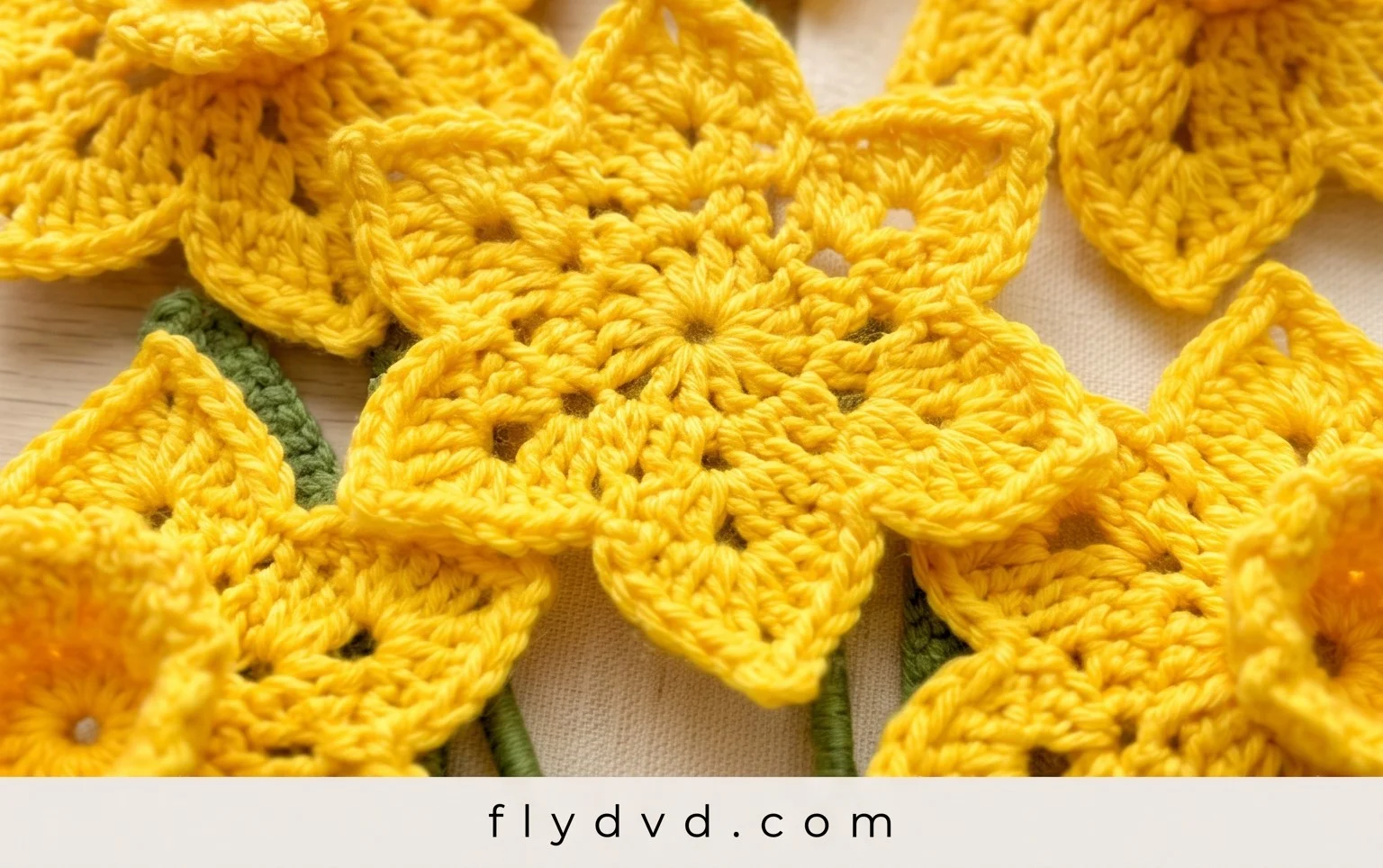
I hope you’re feeling inspired to bring a splash of sunshine into your home with these delightful crochet daffodils! This pattern is perfect for a relaxing afternoon and the results are truly cheerful. Don’t hesitate to give it a try, and when you do, I’d absolutely love to see your creations! Share your beautiful daffodils on social media using #CrochetDaffodils and tag me so I can admire your handiwork. Feel free to experiment with different yarn colors for unique varieties, or perhaps add a touch of embroidery for extra detail. Happy crocheting, and be sure to explore more of my free patterns for endless crafting adventures!